Lake Management Plan -
|
Survey results - Private and Public
- 2024 LIMNOPRO Aquatic Vegetation Point -intercept Survey NEW 2024
- 2021 RMB Environmental Laboratories Aquatic Vegetation Point -intercept Survey
- 2018 RMB Environmental Laboratories Aquatic Vegetation Point -intercept Survey
- 2015 MN DNR Water Vegetation Survey
- 1995 MN DNR Lake / Shore Vegetation Overview
Comparison of 2025, 2021 and 2018
Email sent Monday, December 9, 2024
Greetings Homeowners,
This summer (2024) the Board contracted with Limnopro out of St. Cloud to survey the aquatic plants in Clearwater Lake as outlined and published in our Lake Management Plan and annual Lake Health Calendar of action items (you can find these documents on the Clearwater Lake Conservancy website).
The survey company for our previous two surveys, RMB Labs out of Detroit Lakes, was booked this summer and Jeff Zernov recommended Limnopro as they were able to conduct a higher density survey (1 point per ½ acre vs 1 point per acre) as well as conduct sonar mapping of the lake to get an accurate depth of the plant growth and of the lake. The expense for this expanded survey was beyond the Board’s budgeted amount for our aquatic plant survey so the Board was able to raise the funds for the entire survey via a single designated gift.
The survey report is available above. We’ve summarized below some of the highlights.
1. Clearwater Lake has a rich and healthy diversity of native plants overall - the plant community has desirable characteristics for both
recreation and conservation relative to many other lakes in Minnesota.
2. Comparing the last three aquatic plant surveys (2018, 2021 and 2024), there is an increase in overall coverage and density of
aquatic plants and greater overall plant diversity (more species - see table on page 14):
recreation and conservation relative to many other lakes in Minnesota.
2. Comparing the last three aquatic plant surveys (2018, 2021 and 2024), there is an increase in overall coverage and density of
aquatic plants and greater overall plant diversity (more species - see table on page 14):

3. Invasive plant - Eurasian water milfoil (EWM) was the only invasive found; however, curly leaf pondweed has been found in Clearwater in the past
and the invasive starry stonewort has been found in Middle Cullen and Rush lakes in Crow Wing County.
Notes:
and the invasive starry stonewort has been found in Middle Cullen and Rush lakes in Crow Wing County.
Notes:
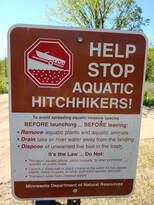
- The County-funded weekend summer boat launch inspection program and the additional hours paid for by our lake homeowners is important to helping reduce the likelihood of these being introduced into Clearwater while also reducing future management costs;
- The invasive spiny water flea has invaded Lake Mille Lacs so inspectors are looking for this as well when conducting their boat and fishing gear inspections.
4. EWM and herbicide treatment (pages 12 and 13) - EWM growth negatively impacts the native plants it grows with and our spot herbicide
treatment approach to EWM does not seem to indicate there was any decline in native plants.
treatment approach to EWM does not seem to indicate there was any decline in native plants.
- “With any herbicide application there can be concern of non-target impacts to vegetative species that are deemed desirable for the lake. Literature has not shown large scale negative impacts on non-target vegetation from small scale spot treatments of plants, similar to what is being done on Clearwater Lake. On the other hand, there is scientific support for the growth of Eurasian watermilfoil to negatively impact native plants it grows with. There does not seem to be evidence from the series of surveys done from 2018 to present that there is widespread decline in native plants in general or specifically in connection to herbicide treatments done on this lake. Nonetheless, without doing a designed experiment it’s impossible to make any causative statement on the matter. If there continues to be concern about herbicide treatments creating negative non-target impacts, we would suggest experiments to test associated hypotheses.”
5. Lake water quality was excellent.
6. Lake plant surveys should continue every three years. Clearwater Lake Conservancy Board
|

|